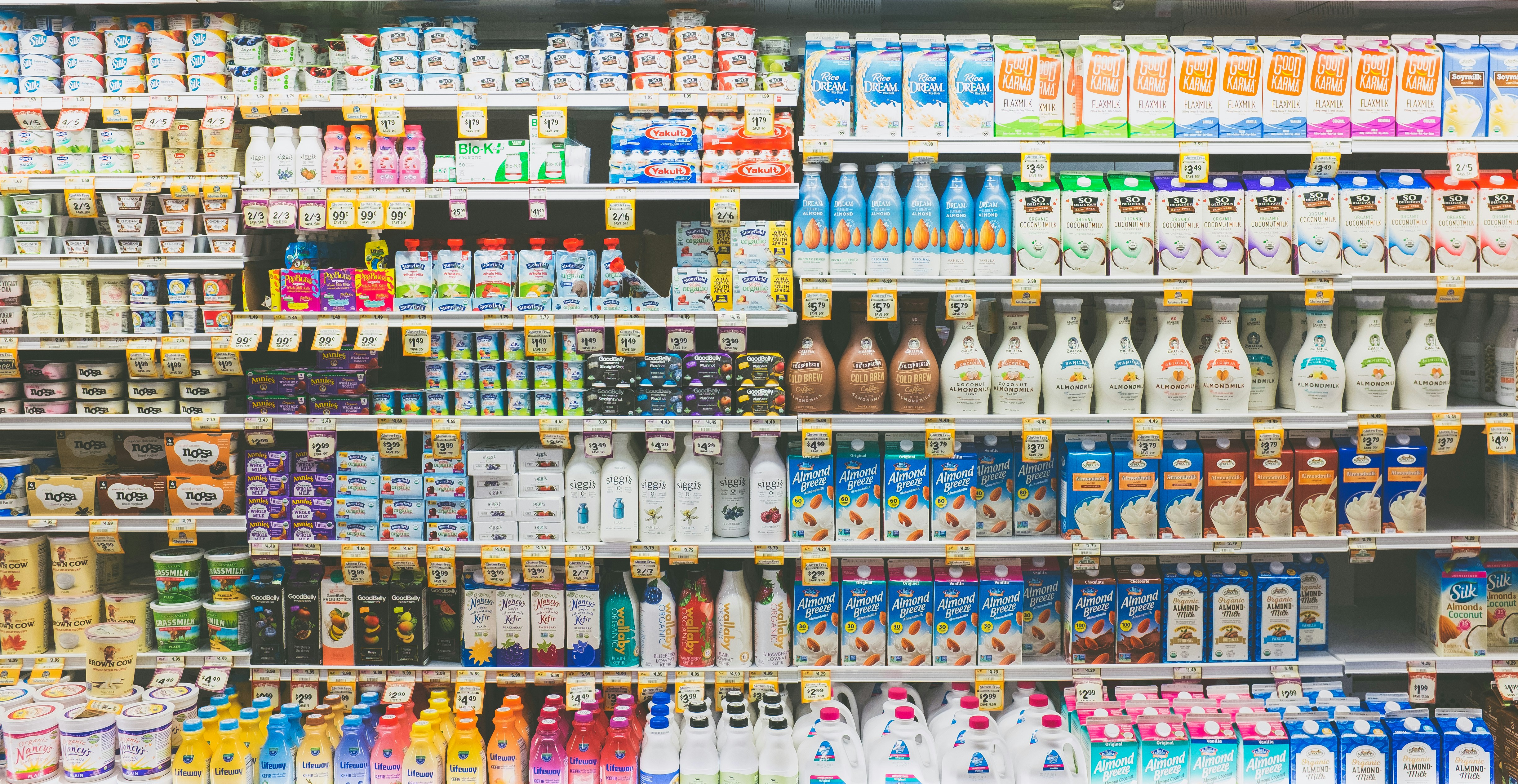
The American CPG industry has built one of the most sophisticated shelf-winning machines in commercial history. Slotting fees. Trade promotions. Planogram negotiations. Category captain programs. The investment required to maintain physical shelf presence at scale runs to more than $200 billion annually in the United States alone, roughly 20 cents of every revenue dollar for the average CPG company. For decades, it has been worth it.
The question brand leaders need to start asking is what they are actually optimizing for. Because the channel growing faster than anything else in retail right now does not have a planogram, does not charge a slotting fee, and cannot be won with a trade promotion.
The Channel Nobody Budgeted For
On Black Friday 2025, AI-referred traffic to U.S. retail sites grew 805 percent year-over-year. In January 2026, traffic arriving from AI sources surged 1,200 percent while traditional search traffic fell 10 percent in the same period. And the shoppers arriving through those AI channels are not browsers: Adobe reported in March 2026 that AI-referred visitors now convert 42 percent more than visitors from traditional channels, and are 38 percent more likely to complete a purchase. Sixty percent of U.S. consumers expect to be using AI shopping agents within the next twelve months.
This is not a trend on a horizon. It is a channel in production, growing at rates no physical retail format has ever approached, and converting at rates that any retail media network would consider exceptional. The budget allocation, however, has not moved.
How AI Agents Actually Choose
When a consumer asks a shopping agent to recommend a protein bar, a laundry detergent, or a baby formula, the agent does not consult a planogram. It parses structured product data: ingredient attributes, use case descriptions, compatibility claims, real-time availability, and the accumulated signal of how a brand's content has been structured across the web. The brand that invested the most in end-cap displays is not the brand that wins this recommendation. The brand with the most machine-readable, attribute-rich product content is.
This is a profound mismatch. The assets CPG brands have spent decades building — the retail relationships, the promotional machinery, the planogram position — are largely invisible to the systems now influencing a rapidly growing share of purchase decisions. It is not that those investments no longer matter. It is that they confer no advantage whatsoever in the channel that is growing fastest.
"The brands that will win agentic commerce are building their advantage right now, before urgency becomes consensus and the window for differentiation closes."
The Budget Has Not Caught Up
There is almost certainly no meaningful line item in most CPG 2026 commercial budgets for agentic commerce. The category may appear in a digital or innovation budget as a footnote, but it does not receive resource allocation commensurate with a channel growing at four-digit percentages year-over-year. McKinsey projects AI agents will orchestrate as much as $1 trillion in U.S. retail revenue by 2030. The brands that capture that opportunity are not the ones who reallocate budget in 2028 when the numbers are undeniable. They are the ones doing the foundational work now, when the competitive advantage is still available.
Getting onto the invisible shelf is not primarily a media spend problem. It requires auditing product data for the attributes agents actually parse: ingredient composition, use case specificity, compatibility claims, and real-time availability. It means establishing direct data relationships with Google Merchant Center and OpenAI's merchant program. And it means assigning ownership of this work inside the organization before the question becomes urgent enough to attract every consultant and vendor in the category.
The physical shelf is not going anywhere. The investment required to compete on it is not going away either. But the fastest-growing channel in retail is being built right now, by a set of rules most CPG commercial teams have never read. The brands that show up on the invisible shelf in 2030 will be the ones who started learning those rules in 2026.
Statistics in this article draw on data from Strategy& (PwC), Adobe Commerce, Previsible, McKinsey Global Institute, and Mordor Intelligence. Analysis and editorial perspective are original to The Invisible Shelf.